
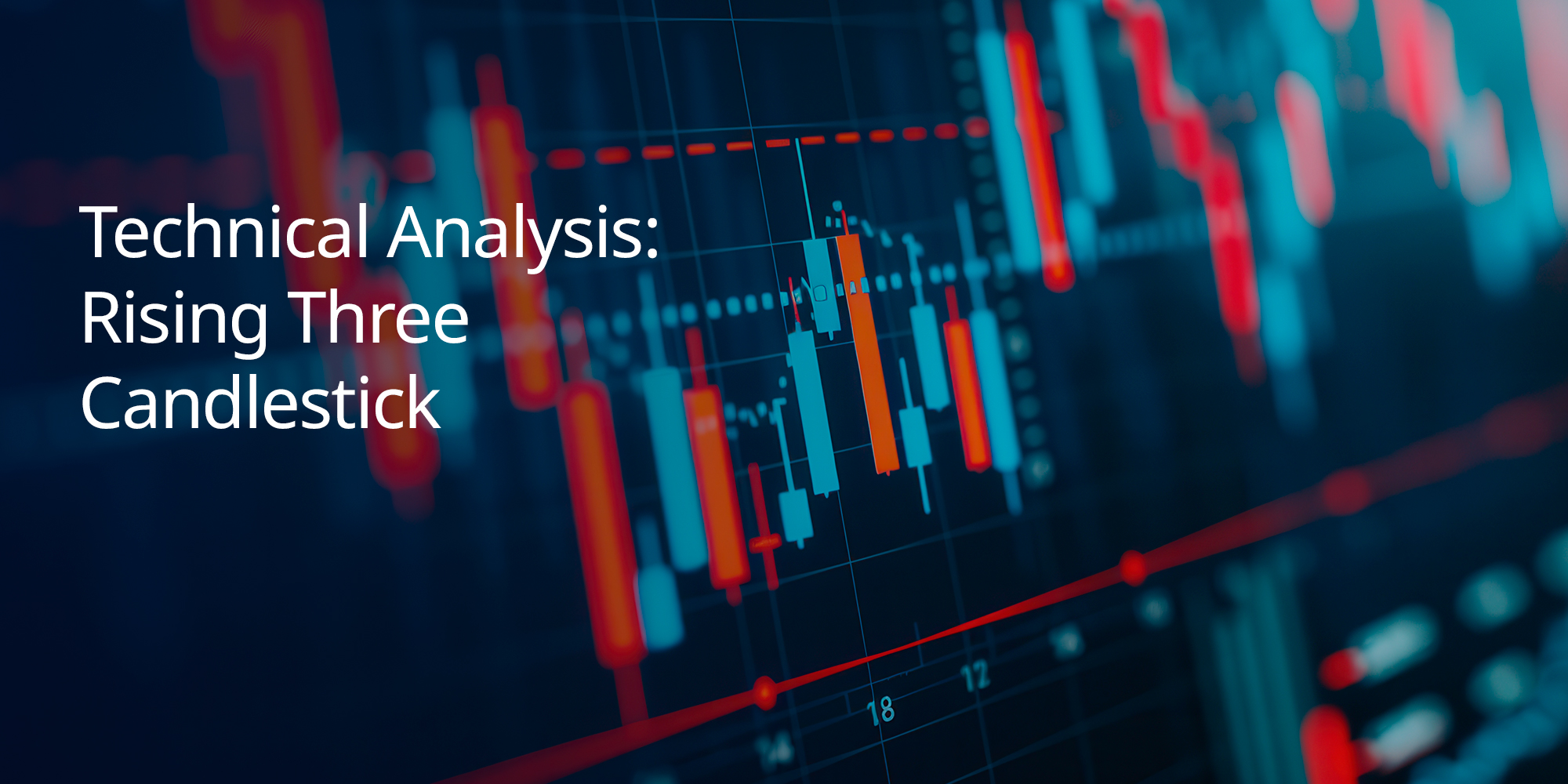

Technical Analysis: Rising Three Candlestick – Definition, How it Works, Types, Calculation, Trading
The Rising Three Candlestick pattern is a powerful bullish continuation signal in technical analysis, often appearing within strong uptrends. This five-candle formation reflects brief market consolidation before buyers regain control and push prices higher.
With its structured layout and reliable trend confirmation, this pattern offers traders a tactical advantage when timing long entries.
What is a Rising Three Candlestick?
The Rising Three Candlestick is a bullish continuation pattern that appears during an uptrend. It reflects a brief consolidation or pause in momentum before the upward trend resumes. Comprised of five candles, the pattern signifies that buyers remain in control despite short-term selling pressure.
How Does the Rising Three Candlestick Pattern Structure?
- First Candle – Strong Bullish Candle: Large green candle signaling trend strength.
- 2nd to 4th Candles – Minor Bearish Pullback: Three small red candles that stay within the range of the first.
- 5th Candle – Bullish Breakout Candle: Green candle closing above the high of the first, confirming continuation.
Volume often dips during consolidation and rises on the breakout. Recognising this pattern helps traders confidently hold or enter long positions.
How to Trade using the Rising Three Candlestick Pattern?
- Identify the trend: Confirm an existing uptrend using moving averages or trendlines.
- Spot the formation: Look for a large green candle, three smaller bearish candles within it, and a fifth bullish breakout candle.
- Confirm the signal: Use MACD, RSI, and moving averages to validate the setup.
What are the benefits of the Rising Three Candlestick Pattern?
- Confirms Trend Continuation: Signals end of consolidation and resumption of the bullish trend.
- Clear Trade Setup: Defined entry at fifth candle close above first; stop-loss below recent lows.
What are the limitations of the Rising Three Candlestick Pattern?
- Pattern Variability: Internal candles may vary slightly, making interpretation tricky.
- False Continuation Signals: May lead to premature entries in weak or overextended markets.
How accurate are Rising Three Candlestick Patterns?
Accuracy depends on:
- Use of confirmation tools (e.g., MACD, Bollinger Bands).
- Market context (e.g., pattern forming above 50-day EMA).
- Volume trends (e.g., low during consolidation, high on breakout).
Which Indicators are the Best to Trade with the Rising Three Candlestick Pattern?
- Moving Averages: Identify trend direction and strength.
- MACD: Confirm momentum shifts and detect divergences.
- Bollinger Bands: Evaluate volatility and price breakout zones.
Is Rising Three Bearish?
No, it is a bullish continuation pattern. The presence of short-term bearish candles within the pattern indicates healthy consolidation—not a trend reversal.
What is the Most Powerful Triple Candlestick Pattern aside from Rising Three?
The Morning Star is a powerful three-candle bullish reversal pattern:
- Long bearish candle,
- Small-bodied candle showing indecision,
- Long bullish candle confirming trend reversal.
It is especially reliable when confirmed by RSI, Stochastic Oscillator, or volume.
Conclusion
The Rising Three Candlestick pattern gives traders a strategic window into bullish continuation opportunities. When paired with confirmation tools such as MACD, Moving Averages, and Bollinger Bands, it becomes a powerful part of a technical trading strategy.
TradeSmart’s advanced charting tools help validate and act on this pattern with precision. Visit TradeSmart now to elevate your trading game.